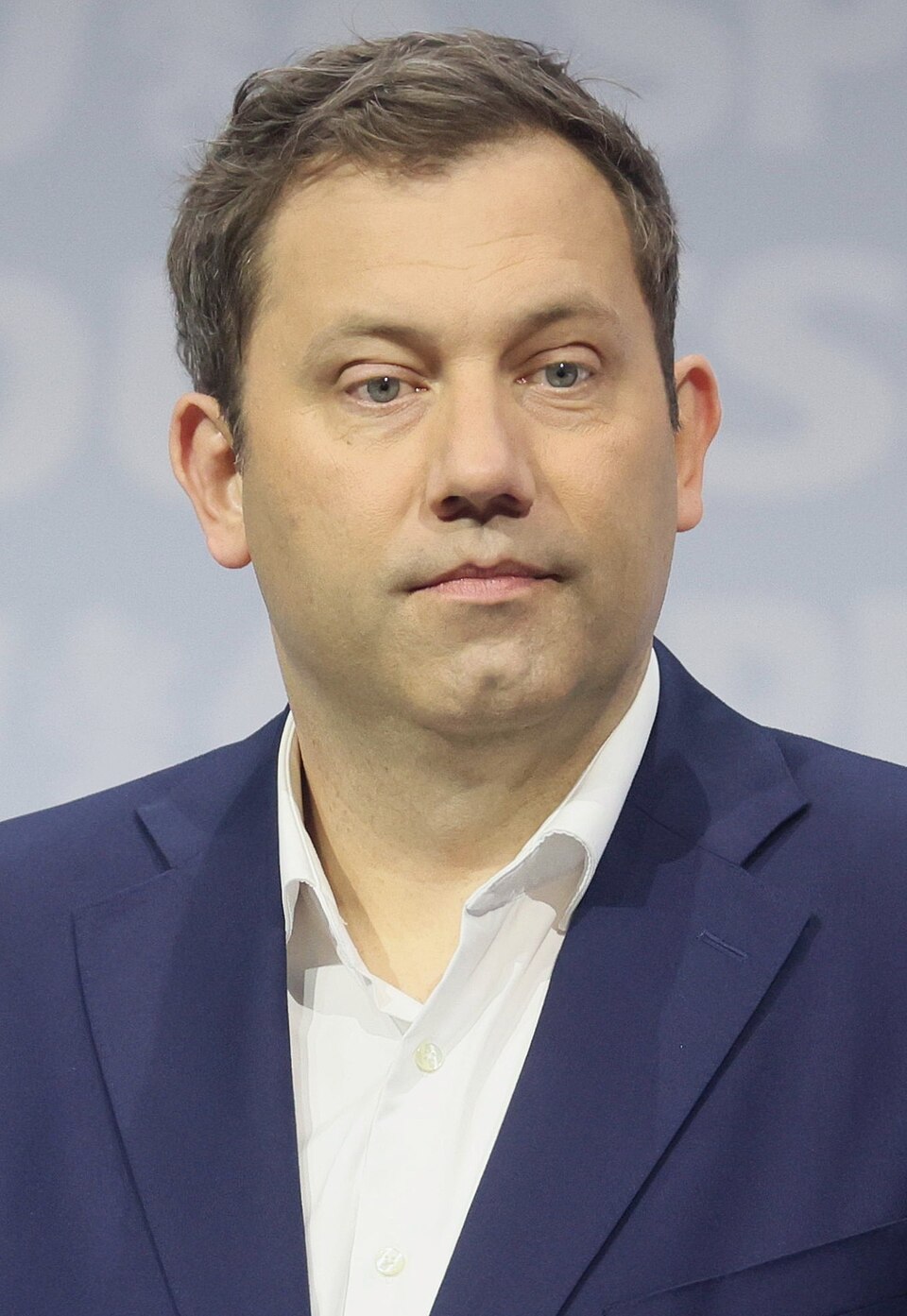
Lars Klingbeil's Ascent: From Local Roots to Germany's Top Ranks
Lars Klingbeil stands as one of the most prominent and rapidly rising figures in contemporary German politics. His journey, marked by dedication, strategic acumen, and a deep connection to his constituents, offers a compelling political path. From his humble beginnings in rural Lower Saxony to potentially holding the nation's second-highest cabinet post, Klingbeil's trajectory is a testament to persistent political engagement. For those keen to understand the man poised to shape Germany's financial future and co-lead its largest party, delving into the comprehensive Lars Klingbeil Lebenslauf provides invaluable insights into his rapid ascent.
Most recently, after serving as the SPD's parliamentary group leader, Klingbeil has been earmarked for the pivotal roles of Federal Minister of Finance and Vice Chancellor in the proposed grand coalition. This move would position him second only to the designated Chancellor Friedrich Merz (CDU), entrusting him with the formidable task of crafting budget drafts for 2025 and 2026 – a challenge that notoriously destabilized the previous "Ampel" government. His background, experience, and policy priorities are now under intense scrutiny as he prepares to shoulder such immense responsibility. Let's explore the key milestones that define his remarkable career.
The Early Years: Shaping a Political Mindset
Born in Soltau, Lower Saxony, in February 1978, Lars Klingbeil spent his formative years in the nearby small town of Munster. This region, deeply shaped by its strong military presence, would later influence his policy interests significantly. His father was a professional soldier, and his mother worked in retail, providing him with a grounded perspective on everyday German life. Munster remains his enduring home, a place he often returns to and where his roots are firmly planted.
Birth, Upbringing, and First Glimpses of Leadership
Klingbeil's political awakening began early, not in grand parliamentary halls, but within the familiar corridors of his local gymnasium. As the student representative in Munster, he experienced firsthand the power of collective action and reasoned argument. "That's when I learned that you can make a difference if you are persistent and have good arguments," Klingbeil recounts on his website. This early lesson in advocacy and perseverance would become a hallmark of his political style, laying the groundwork for his future engagements.
Academic Pursuits and Early Political Engagements
After completing his Abitur in 1998, Klingbeil fulfilled his Zivildienst (alternative civilian service) at the Bahnhofsmission (station mission) in Hannover. This period of social service preceded his academic journey, which began in 1999 at the University of Hannover. There, he pursued a Magister Artium degree, specializing in Political Science, Sociology, and History, graduating in 2004. Crucially, during his university years, he gained invaluable practical experience working in the constituency office of then-Federal Chancellor Gerhard Schröder. This direct exposure to high-level politics provided him with an unparalleled learning environment, offering insights into the machinery of federal governance and political strategy. Simultaneously, he deepened his local commitment by serving on the Munster city council from 2001 to 2016, demonstrating his dedication to both grassroots activism and national affairs.
Ascending the Political Ladder: Key Milestones
Lars Klingbeil's career is a masterclass in progressive political advancement, characterized by strategic roles and a consistent upward trajectory within the SPD.
From Local Councils to the Bundestag
His dedication to local governance continued beyond Munster, as he was elected as a district council member (Kreistagsabgeordneter) in the Heidekreis in 2006. Nationally, his influence grew within the SPD's youth organization, the Jusos, where he served as one of the deputy federal chairmen from 2003 to 2007. These roles provided him with a platform to develop his political voice and build a network within the party. His breakthrough onto the national stage came in 2009 when he was first elected as a Member of the Bundestag (MdB). His mandate grew stronger over time; he has directly won his constituency since 2017, achieving an impressive personal best in the February 2025 federal election with the highest first-vote result for the SPD nationwide. This speaks volumes about his strong connection with voters and his ability to rally support.
Strategic Roles: General Secretary and Party Co-Chair
Klingbeil's strategic vision was evident in 2017 when he collaborated with then-parliamentary group leader Andrea Nahles to develop the SPD's election program, focusing on critical areas such as work, pensions, and digitalization. His political star continued to rise later that year when he was appointed the party's General Secretary in December, succeeding Hubertus Heil. This role catapulted him into the party's inner circle, allowing him to shape strategy and communication. In December 2021, his leadership capabilities were further recognized when he was elected co-chairman of the SPD alongside Saskia Esken. Following a challenging period for the party after the federal election in February 2025, Klingbeil swiftly took on the additional responsibility of parliamentary group leader, demonstrating his readiness to step up during difficult times and his central position within the party hierarchy. This comprehensive Lars Klingbeil Lebenslauf highlights a career built on consistent contribution and increasing responsibility.
Crafting Policy: Digitalization, Defense, and Social Programs
Beyond his party leadership roles, Klingbeil has carved out distinct policy profiles. He is a vocal advocate for digitalization, recognizing its transformative potential for society and the economy. Furthermore, he has consistently championed defense policy and the modernization of military facilities. This focus is deeply rooted in his upbringing; his hometown of Munster hosts the largest army base and the fourth-largest Bundeswehr (German armed forces) location, with troops having been prepared for deployment there for over a century. His intimate knowledge of military life and its societal impact gives his defense advocacy a unique authenticity. As a potential Finance Minister, his approach to balancing defense spending with other critical social and digital investments will be closely watched, offering insights into his pragmatic approach to governance. For a deeper dive into his potential financial mandate, consider reading Germany's Next Vizekanzler: Lars Klingbeil's Financial Mandate.
Klingbeil's Vision and Impact: Beyond the Resume
Lars Klingbeil's influence extends beyond his formal positions, encompassing a dynamic vision and a willingness to evolve personally and politically.
Navigating High Office: The Potential Finance Minister Role
The prospect of Klingbeil becoming Federal Minister of Finance and Vice Chancellor is highly significant. This role demands not only a deep understanding of economic policy but also exceptional negotiating skills and political leadership. His immediate task, presenting the budget drafts for 2025 and 2026, is a formidable challenge, especially given the recent government's collapse over fiscal disagreements. Klingbeil's background suggests he brings a blend of SPD social democratic values with a pragmatic, results-oriented approach. His ability to build consensus and navigate complex parliamentary dynamics will be crucial in steering Germany's economic course in a period of significant global and domestic uncertainty. This is where his meticulous Lars Klingbeil Lebenslauf transitions from a historical account to a blueprint for future action.
Personal Evolution: From Conscientious Objector to Defense Advocate
One of the most striking aspects of Klingbeil's journey is his personal evolution regarding defense policy. In his youth, he refused military service. However, his perspective underwent a fundamental shift in 2001. That year, marked by the 9/11 attacks, Klingbeil was interning in Washington D.C. The events and their aftermath profoundly altered his view of the military's role and Germany's defense responsibilities. This personal transformation highlights his capacity for critical reflection and adaptation – essential traits for any national leader. It underscores his ability to reassess deeply held convictions in the face of changing global realities, offering a nuanced and pragmatic approach to national security.
A Glimpse into the Private Persona: Music, Football, and Resilience
While his public life is dominated by politics, Klingbeil also offers glimpses into his private world. He has been married to Lena-Sophie Müller, the managing director of Initiative D21, since August 2019. Away from the political stage, his passions reveal a more personal side: as a youth, he harbored dreams of becoming a rockstar or a professional footballer, and his love for music and football remains a part of his life today. The profile also hints at significant personal challenges Klingbeil has faced, discussing a period he called the "hardest time of his life." These aspects humanize the politician, revealing a multifaceted individual who balances rigorous public service with personal interests and resilience.
The Road Ahead: Challenges and Opportunities
As Lars Klingbeil potentially steps into one of Germany's most powerful cabinet positions, the eyes of the nation and Europe will be on him.
The Weight of Expectations: What's Next for Klingbeil
The expectations placed on Klingbeil are immense. Not only must he navigate the intricate challenges of federal budgeting, but he must also help define the SPD's future direction within a new coalition. His leadership will be critical in shaping the government's fiscal policies, addressing economic disparities, and fostering sustainable growth. For anyone tracking German political leadership, Klingbeil’s continued development offers a compelling case study in navigating high-stakes political landscapes and evolving public expectations. His adeptness at managing both party and parliamentary responsibilities, as meticulously detailed in the Lars Klingbeil Lebenslauf, suggests he is well-prepared for these trials.
How Klingbeil's Experience Shapes Future Policies
Klingbeil's diverse experience, spanning local administration, youth politics, strategic party management, and parliamentary representation, provides him with a unique vantage point. His emphasis on digitalization reflects a forward-thinking perspective crucial for modernizing Germany's economy and public services. His pragmatic approach to defense policy, born from personal evolution, suggests a leader capable of making tough decisions informed by a comprehensive understanding of national security needs. These qualities, combined with his proven ability to connect with voters, position him as a vital voice in shaping Germany's policies for the coming years.
Conclusion
Lars Klingbeil's political journey from a student representative in Munster to a potential Federal Minister of Finance and Vice Chancellor is a story of continuous growth, strategic engagement, and personal evolution. His comprehensive Lars Klingbeil Lebenslauf illustrates a politician deeply rooted in his local community yet capable of navigating the highest echelons of national power. As he prepares to tackle some of Germany's most pressing challenges, his blend of pragmatic leadership, policy expertise, and personal resilience will undoubtedly play a critical role in shaping the nation's future direction. Observers of German politics can anticipate a dynamic and impactful tenure from this rising star, whose journey reflects a profound commitment to public service.