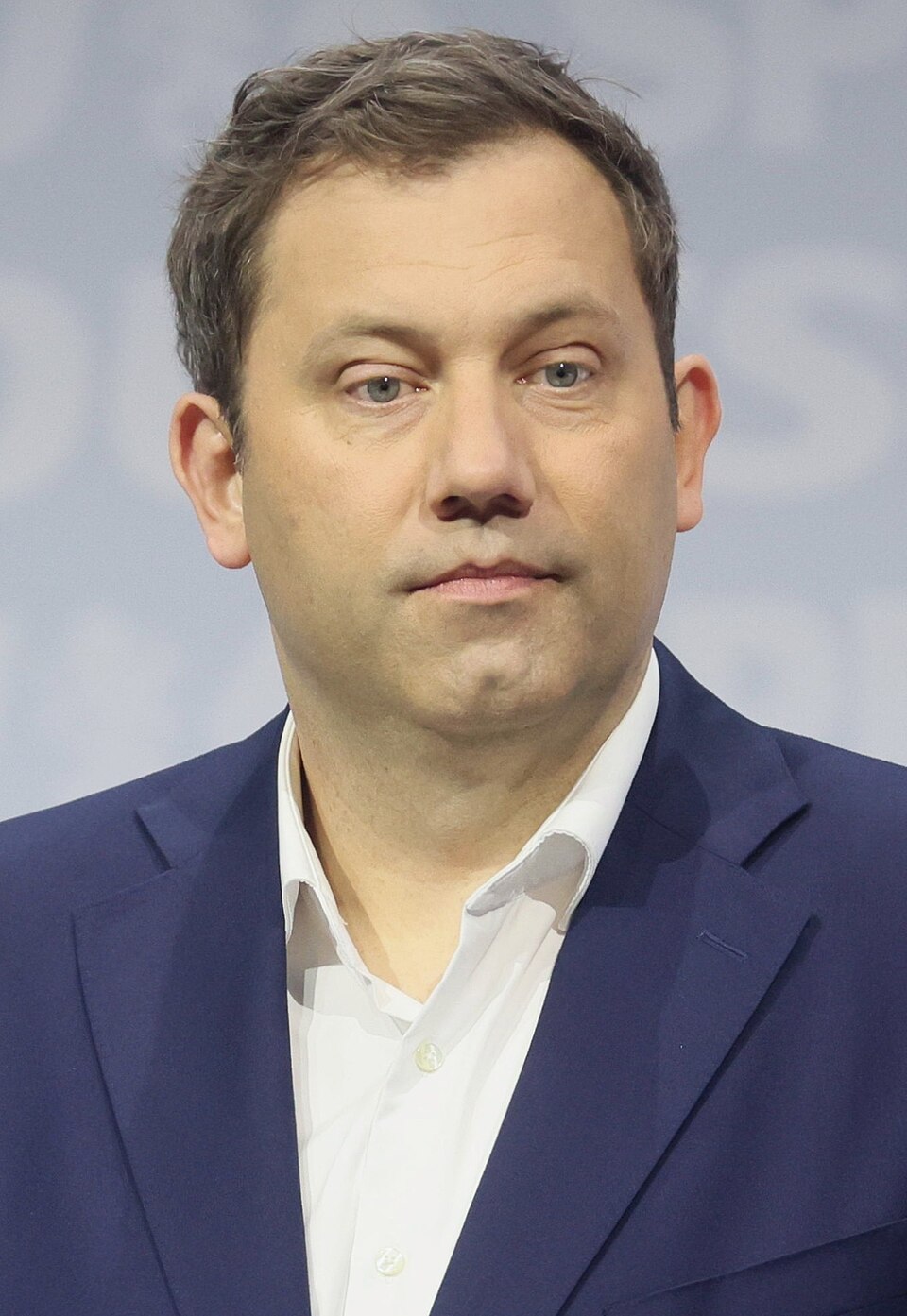
Germany's Next Vizekanzler: Lars Klingbeil's Financial Mandate
Germany stands at a pivotal moment, with a new political landscape on the horizon. As the nation anticipates a potential CDU-SPD coalition, all eyes are turning to the figures poised to lead it. Among them, Lars Klingbeil, co-chair of the SPD, is slated to step into the incredibly demanding dual roles of Bundesfinanzminister (Federal Minister of Finance) and Vizekanzler (Vice-Chancellor). This appointment places him in the cabinet's second most influential position, directly under the designated Federal Chancellor Friedrich Merz (CDU), and entrusts him with the monumental task of steering Germany's economic future. His immediate challenge will be to craft cohesive and sustainable budget drafts for 2025 and 2026 – a hurdle that famously brought down the previous Ampel government. To truly grasp the significance of this mandate, we must delve into the comprehensive career and personal journey that has shaped him.
From Soltau to the Bundestag: The Early Chapters of Lars Klingbeil's Lebenslauf
To understand the politician, one must first understand the man.
Lars Klingbeil's Lebenslauf begins on February 23, 1978, in Soltau, a town in Lower Saxony. He spent his formative years in the smaller town of Munster, approximately 20 kilometers away, a place he still calls home today. His upbringing provided him with a grounded perspective: his father served as a professional soldier, while his mother worked as a retail clerk. These early influences likely instilled a sense of duty and an understanding of the daily economic realities faced by ordinary German families.
After successfully completing his Abitur in 1998, Klingbeil opted for Zivildienst (civilian service) at the Bahnhofsmission Hannover, a social support organization, rather than military service. This experience, providing assistance to people in need at a busy train station, offered an early exposure to social challenges and community welfare. In 1999, he embarked on an academic path at the University of Hannover, pursuing a Magister Artium degree in Political Science, Sociology, and History, which he successfully concluded in 2004. This multidisciplinary education laid a robust theoretical foundation for his future political endeavors.
His political awakening wasn't confined to university lectures. Klingbeil first dipped his toes into public service as a student representative at Gymnasium Munster. It was there, as he himself notes on his website, that he learned a crucial lesson: "that you can make a difference if you remain persistent and have good arguments." This early realization of advocacy and strategic communication has been a constant thread throughout his career. During his university years, he gained invaluable practical experience working in the constituency office of the then-Federal Chancellor Gerhard Schröder. Simultaneously, his commitment to local governance was evident through his long tenure on the Munster city council, serving diligently from 2001 to 2016. This blend of grassroots engagement and exposure to the highest echelons of German politics provides a rich tapestry to
Lars Klingbeil's Rise: From Local Roots to Germany's Top Ranks.
A Steady Ascent: Key Milestones in Klingbeil's Political Career
The trajectory of
Lars Klingbeil's Lebenslauf is marked by a consistent and rapid ascent through the ranks of the SPD. His journey into broader political spheres began in 2003 when he was elected as one of the deputy federal chairs of the Jusos, the youth organization of the SPD, a position he held until 2007. This role gave him a platform to shape youth policy and hone his leadership skills on a national level. In 2006, he further solidified his local political presence by becoming a member of the district council in Heidekreis.
The year 2009 marked a significant turning point when Klingbeil successfully secured a seat in the Bundestag, Germany's federal parliament. His dedication to his constituents was further underscored in 2017 when he won his electoral district directly, an achievement he repeated with even greater success in the hypothetical 2025 Bundestag election, securing the best first-vote result for the SPD nationwide. This demonstrates not only popular appeal but also an effective campaign strategy and deep roots in his local community.
His influence within the SPD continued to grow. In 2017, he played a crucial role alongside the then-faction leader Andrea Nahles in developing the SPD's election program, focusing on vital areas such as employment, pensions, and digitalization. Later that year, he was appointed General Secretary of the party, succeeding Hubertus Heil – a demanding position requiring significant organizational skill and political acumen. His leadership was further acknowledged in December 2021 when he was elected co-chairman of the SPD, serving alongside Saskia Esken. Most recently, following the challenging results for his party in the 2025 Bundestag election, he took on the additional responsibility of parliamentary group leader (Fraktionschef), demonstrating his willingness to step up during difficult times and lead the party's legislative agenda.
The Financial Mandate: Navigating Germany's Fiscal Future
Assuming the mantle of Bundesfinanzminister and Vizekanzler is arguably the most formidable challenge in
Lars Klingbeil's Lebenslauf to date. The immediate and most pressing task is to present viable budget drafts for 2025 and 2026. This is no mere administrative hurdle; the failure to agree on a budget was the very issue that led to the collapse of the previous "Ampel" government. Klingbeil will need to draw upon every aspect of his extensive political experience, from grassroots negotiation to national party leadership, to forge a consensus that satisfies the demands of a new coalition.
While his background is in political science rather than economics, the Finance Minister's role in Germany is as much about political negotiation and strategic vision as it is about pure fiscal expertise. Klingbeil's proven ability to unite factions within his own party, his experience in program development (which included significant economic and social policy components), and his strategic thinking will be indispensable. He will need to balance the imperative of fiscal stability and adherence to the constitutional "debt brake" with the need for investment in key areas like digitalization, climate protection, and social welfare.
**Practical Insight:** Success in this role will require not only a deep understanding of Germany's economic landscape but also exceptional communicative skills to explain difficult decisions to the public and rally support from disparate political camps. Klingbeil's background suggests a politician adept at both. His commitment to digitalization, for instance, could inform innovative approaches to public finance and economic modernization, potentially leading to more efficient public services and investment strategies. He will also need to engage deeply with economic experts and state ministers to ensure the budget reflects the diverse needs and capabilities of Germany's federal system.
Beyond Politics: Personal Insights and Shifting Perspectives
Beyond the political stage,
Lars Klingbeil's Lebenslauf also offers glimpses into the personal journey that has shaped his leadership. He is married to Lena-Sophie Müller, the managing director of Initiative D21, an organization dedicated to promoting the digital society in Germany. This partnership not only provides personal stability but also connects him to further insights into the evolving digital landscape – a field he has long championed within the SPD.
Interestingly, the references also reveal a more youthful, perhaps less conventional side to Klingbeil. In his youth, he harbored dreams of becoming a rock star or a professional football player. While those career paths didn't materialize, his passion for music and football remains a part of his life, hinting at a personality with broad interests and a capacity for dedication beyond politics. These personal pursuits can often provide a crucial outlet and maintain perspective in the high-pressure world of national governance.
A particularly poignant aspect of Klingbeil's personal and political evolution concerns his views on defense policy. Despite initially refusing military service, his perspective underwent a fundamental shift following a pivotal internship in Washington D.C. in 2001, the year of the September 11 attacks. This experience profoundly altered his understanding of national security and the role of the armed forces. Consequently, Klingbeil has become a vocal advocate for defense policy and the modernization of military sites – a stance reinforced by his roots in Munster, home to Germany's largest army base and the fourth-largest Bundeswehr location. This demonstrates a capacity for personal growth and a willingness to re-evaluate deeply held beliefs in light of new experiences and global events, a vital quality for any leader. This adaptability and evolving perspective are key themes when considering
Lars Klingbeil: Political Path, Personal Shifts, and Key Policies. Furthermore, subtle hints in the context about him overcoming a "hardest time of his life" eleven years prior (likely a battle with cancer, as indicated by source titles), underscore a profound resilience that could serve him well in navigating intense political pressures.
Conclusion
Lars Klingbeil's proposed elevation to Bundesfinanzminister and Vizekanzler marks a significant chapter in his already impressive career. His
Lars Klingbeil Lebenslauf is a testament to consistent dedication, strategic progression, and a willingness to embrace increasingly demanding leadership roles. From his foundational experiences in Soltau and Munster to his rapid ascent through the SPD, culminating in co-chairmanship and parliamentary leadership, he has demonstrated a robust political acumen. The financial mandate he faces is daunting, requiring not only a shrewd understanding of economic policy but also exceptional skills in political negotiation and consensus-building. Yet, his journey, marked by personal growth, evolving perspectives, and a clear vision for Germany's future, suggests he is uniquely prepared to tackle these challenges. As Germany looks ahead, Klingbeil's blend of pragmatic leadership and deep political experience will be crucial in navigating the complex fiscal landscape and ensuring the nation's continued stability and prosperity.